Front Brakeless

This site may earn a commission from merchant affiliate
links, including eBay, Amazon, Skimlinks, and others.

Joined
Sep 14, 2007
Threads
12
Messages
45
Location
Mandeville, LA
What I mean by brakeless is this.
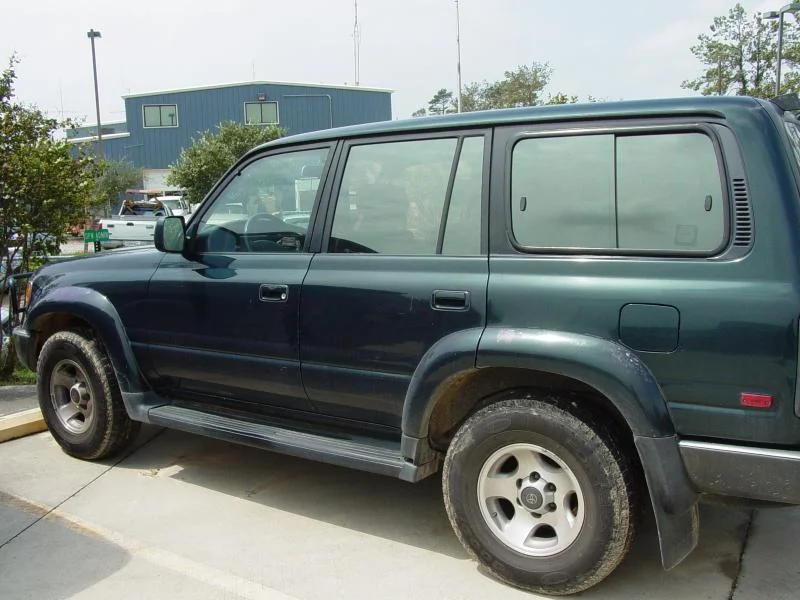
It seems that most of the braking force is being applied to the rear disc brakes. I changed the rear and front brake pads yesterday. The rear needed it but the front had plenty of pad left. The brake situation has been like this since I owned the truck. I thought a change would help. The break peddle has a ferm feel to it. But when I slam on the brakes it doesn't feel like the front is gripping as much as it should.
I checked the fluid level and it is fine no leaks.
Could it be the LSPV? I thought it might be but even under a load in the back it is still rear favoring.

94' Stock, new shocks, 141,000m
DSC02960.webp
 
That is different from my '94. I only get about 12,000 to 15,000 miles out of my front brakes. I have had mine for about 4 years and have never needed to change my rear pads.

LSPV would be what I would check first. Make sure that is has not been moved and the arm is in the correct position. Never have messed with mine (stock height).

Did you do a thorough brake bleed (including the LSPV)? Check the front brake lines for condition and kinks / binds.

Possibly the new shocks changed something?

Sorry, not much help.

Riley
 
What I mean by brakeless is this.
It seems that most of the braking force is being applied to the rear disc brakes. I changed the rear and front brake pads yesterday. The rear needed it but the front had plenty of pad left. The brake situation has been like this since I owned the truck. I thought a change would help.

So you're saying that you are changing out rear pads more often than front? That's a clear indicator that the rear is seeing more force than the front, which can introduce dangerous oversteer conditions in emergency braking.


Could it be the LSPV? I thought it might be but even under a load in the back it is still rear favoring.

I think you misunderstand the way the LSPV works.

The Load Sensing Proportioning Valve works by opening up more, the more load you have. The less load you have, the more it closes and restricts flow.

So "under a load in the back" it would open even more and be even more rear favoring, not less.

Here's what you do.

  • Remove or strap down everything in the vehicle. You should have about the normal load you would carry, but be sure everything is secure.
  • Travel to a gravel parking lot or road. You want somewhere with lots of clearance and where you can test braking safely.
  • Disable ABS by pulling the ABS fuse.
  • Get up to decent speed, and hit the brakes hard. Your goal is to lock up all four tires. (This is why step 1 is important!)
  • Look at the skid marks and identify which tires are locking up first (a helper who is outside the vehicle watching will help).
  • If the rears are locking up before the fronts, then adjust your LSPV up to reduce the amount of pressure to the rear. This thread may help with adjusting it.
  • Repeat until you are comfortable with the braking force.
  • Don't forget to reinstall the ABS fuse.
  • Travel home, and post up your results here. Include pics!


Keep in mind that you want your fronts to lock up quite a bit before your rears do. The reason for this is that if your rears lock up before your fronts, it will introduce oversteer which is extremely dangerous. If the fronts lock up before the rear, it can introduce understeer which isn't a good thing, but much more easily controlled than oversteer is.

Keep in mind that in this simple test you will not be introducing a lot of the variables that can make oversteer worse, such as going around a corner or swerving hard while braking. Those will greatly amplify the vehicles tendancy to oversteer, so even if it's impossible for the rear brakes to lock up before the front in a straight line it's possible to cause that in other circumstances.

I've gone into detail on oversteer vs understeer in several other threads. You can read that here:
https://forum.ih8mud.com/80-series-tech/330949-bypass-lspv.html#post4946056


 
To answer some queastions;
I did not blead the brakes after changing the pads becase I still have firmness in the brake peddle.
I did some testing of the brakes on a gravel road with the abs fuse removed; The rears would lock up before the front.
I don't know if it makes a difference or not but the rear brake responsiveness happins during average and light braking applications.

So I took Ebag's advise and raised the LSPV to its max height allowed. (1/2")

Not muched changed. So I took ot the FSM and looked into adjusting the LSVP. I didn't have any of the gages to see what the pressure was at the rear brake lines. But it did mention adjusting the adjustment shackle, "lengthen to lower the pressure."

The FSM states that each turn of the shackle lowers or increases the pressure by 14psi. I turned it 7 times. I'll drive tomorrow to see if this helped.
 
I did some testing of the brakes on a gravel road with the abs fuse removed; The rears would lock up before the front.

I should have asked you to measure your stopping distance. :o

Perhaps your rears aren't getting too much power, but the problem is that your fronts aren't getting enough. When was the last time you checked your front brakes for even wear and the calipers moving smoothly? Last time they were rebuilt/replaced?
 
Ebag,
I didn't pay attention to the stopping distance either.
When I changed the pads I removed the calipers. They moved smoothly as in putting a bar between the cylinders and disc to make room for the new pad. The wear is even among all four pads in the front.

To my knowledge the calipers were never replaced.
You think there might beair in the lines going to the front?
 
make sure your front wheels are not loose, meaning the hubs/wheel bearings, not the lug nuts. with the front end on jack stands, is there any play in the front wheels?
 
x2 on the LSPV. either:
a) your LSPV's rod might need to be adjusted lower, or;
b) your LSPV unit might need to be adjusted higher
If this doesn't solve the problem, you might have seized front brake calipers. i suggest in either case, have a complete brake job done.
 
Back
Top Bottom