

Coolant drip when COLD

This site may earn a commission from merchant affiliate
links, including eBay, Amazon, Skimlinks, and others.

Joined
Oct 30, 2006
Threads
73
Messages
681
Location
Columbus, OH
I get a couple drips of coolant on the driveway when the outside temperature gets below 30. The drip lands in the area between the front axle and the the radiator on the driver's side. This only happens when its cold and amounts to a few ounces a month. After the engine runs a few minutes and warms up, the drip stops. I looked at the coolant discharge pipe attached to the head and I don't think it is leaking there. See picture. There is a small amount of white crud on the head but I don't think that is the problem. Is there anything else I should be looking at in that general area? Thanks in advance for any suggestions.
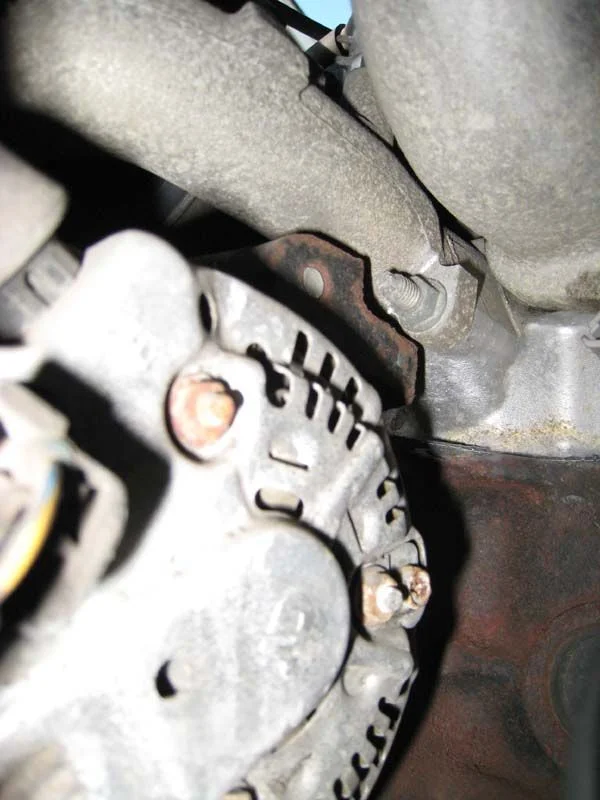
coolant.webp
 
My favorite tool for finding this type of leak is a cooling system pressurizer. Pump the system to running pressure when cold, this increases the volume of leakage, making it easier to find. Maybe able to rent one at a local parts store, like vatozone?
 
Probably the PHH, I've had this happen on both truck that I replaced the PHH on- one with silicone, one with Gates Green Stripe. They both stopped on their own.
 
I had a coolant leak in the same spot at start up. It was coming from the upper radiator hose where it connects to the engine. It turned out to be the hose clamp. I put one of those expensive constant tension clamps on it and it's fine now.
 
Definitely not the PHH at that location. I'd follow Kevin's advice as in this area there's a lot of fan turbulence to mislead you as to the source - disrupting normal drip patterns. It will be easy to see with a pressurizer, but be sure the tool you get fits on the radiator neck before driving home and starting to work. Obviously don't open a hot radiator...
 
Yes, that soundsl like excellent advice. It has to be done when the system is completely cold and before the vehicle is started. The system does hold pressure when it is warm. The extreme cold is probably causing something to contract slightly and it re-seals itself with a slight temperature elevation. Thanks everyone.

Definitely not the PHH at that location. I'd follow Kevin's advice as in this area there's a lot of fan turbulence to mislead you as to the source - disrupting normal drip patterns. It will be easy to see with a pressurizer, but be sure the tool you get fits on the radiator neck before driving home and starting to work. Obviously don't open a hot radiator...
 
Yeah, I read that wrong, thought it was behind the axle. In any case, I've had the same thing on the radiator hoses. I'd urge you not to over-tighten the hose clamps for a little drip- obviously check them, but don't go nuts on them.
 
The used 97 had some pitting on that aluminum pipe in the picture on the upper end where the hose from the radiator clamped on it when I bought it. It seeped like yours. I cleaned it up with a wire brush, then smeared JB Weld into the pits to restore the smooth surface. Then lightly sanded it to smooth it further and basically ended up with a nice smooth surface again for the hose to clamp against. Stopped the cold seep. Dunno if that's what is going on or not. I seem to recall the pitting was on the bottom so it was not obvious during the hose change. It can be unbolted to work on the bench if desired - made sanding/smoothing it easier.

DougM
 
Back
Top Bottom