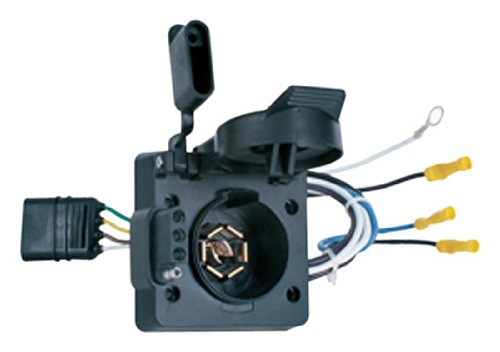
How can I install the flat four harness more securely?

This site may earn a commission from merchant affiliate
links, including eBay, Amazon, Skimlinks, and others.

Joined
Oct 12, 2004
Threads
474
Messages
3,100
Hi everyone,
I installed trailer wire harnesses on both my Xterra and my Highlander, and the harness is just zip tied to the hitch. I want the harness to be neater and more secure. Any ideas on how I can make is more secure?

Thanks,
Zack

image.webp
 
Many years ago some of the harness kits came with a little tab that mounted to the bumper that the plug simply pushed into from behind, thereby mounting the plug.. It was a good idea, but failed miserably and I haven't seen them in years.. If I can't tie mine up above the hitch, I have stowed it up high under the vehicle till ready for use.. Here is where I have mine now, and have had for twenty or more years on f150s, TJs, and now my cruiser,, when I plug in, I run the trailer wiring through the hasp up on top of the hitch.. Just one more reason I prefer a pintle hook..

image-1885580863.webp


image-2914710234.webp
 
Twenty years ago when I bought my FJ62 and installed a hitch I wired a six pin trailer light plug that matched the one on my FJ40 had. Since my 2000 era vehicles had four pin plugs I wired my military trailers to match the four pin. I made a adapter to go from the six pin to four pin for the FJ62. This year I rewired the FJ62. I used the bracket from a 2000 era vehicle to mount the four pin plug. Also have a few old FJ40s I want trailer light plugs so I will probably take a trip to the junk yard to find a few more brackets. Online and auto parts store searches I found nothing.

018.webp
 
Lately I've been going the other direction. I'm moving all of my trailers and tow rigs to the 7 pin RV connector regardless of how many of those pins I actually need on the trailer. From there I can always make or buy an adapter to tow someone else's trailer with a different connector.
 
uhaul

You could go down to your local uhaul and get there 4 wire plug and swap it out because they also offer a mounting bracket that there plug slides into securly and has two mounting screws to bolt to your desired location also the plug has 4 l.e.d. lights on it for easy trouble shooting
 
Install one of these - they are durable and work very well. If you ever upgrade your trailer, say, with brakes, you will already be set for the new harness.

415tZIouhqL.jpg


http://www.amazon.com/Flagline-47185-Hopkins-Multi-Tow-Adapter/dp/B0002Q80GS/ref=cm_cr-mr-title

On my 80 I mounted it up under the frame at an angle, so it is out of sight, out of the way from trail damage, and still reasonably easy to reach. I did have to extend the trailer harness to reach the further location.

http://www.spokanister.net/vehicles_trlr_lights.htm

BTW that pic shows the kind you do NOT want to buy - the plated steel version which corrodes and then shorts out the pins.... that one lasted about four years, and I replaced it with the plastic version.

John Davies
Spokane WA USA
 
Last edited:
I've given up on the flat 4 connectors. Can't seen to make them last more than a couple of years. I'm slowly converting everything (2 trailers, one tow bar, and 3 tow rigs) to the 7 pin RV plug/socket combo.

I did the 'hidden' socket on my old '79 Suburban similar to Jon's prior to towing the pit's generator trailer to Baja in 2000. On the CTD I just put the socket in the face of the rear bumper. Makes it easy and is nearly as protected.
 
You could go down to your local uhaul and get there 4 wire plug and swap it out because they also offer a mounting bracket that there plug slides into securly and has two mounting screws to bolt to your desired location also the plug has 4 l.e.d. lights on it for easy trouble shooting

I'm in the Phoenix area and will check U haul out. I found the four pin online but it doesn't mention a mounting bracket.

Lately I've been going the other direction. I'm moving all of my trailers and tow rigs to the 7 pin RV connector regardless of how many of those pins I actually need on the trailer. From there I can always make or buy an adapter to tow someone else's trailer with a different connector.

I've given up on the flat 4 connectors. Can't seen to make them last more than a couple of years. I'm slowly converting everything (2 trailers, one tow bar, and 3 tow rigs) to the 7 pin RV plug/socket combo.


The OP has a Xterra and Highlander. The Xterra has a frame could probably tow a heavy trailer that required brakes but the Highlander doesn't have a frame and serious I would tow anything that heavy. For that reason I would never install a seven pin trailer plug so a trailer that heavy could possibly be plugged into it.

Going from a four pin to seven pin isn't done to improve the wiring but to upgrade for a heavier trailer. Just changing the plug from four pin to seven pin doesn't changed the tow rating of the vehicle. I have two vehicles that came from the factory with the seven pin plug. Both are rated to tow more than my 7,000# rated car hauler. What my FJ62 and FJ40s can tow is far less. For safety reasons I'm not going to change the trailer plug to work with a trailer they are not capable of towing. Just like I see no reason to change from a four pin to seven pin plug on my three military trailers that just have two simple dual element bulbs. If the wiring wasn't done at the factory I have always done it myself. That includes heavier wire, soldered connects and shrink tube. I wrap the wires with electric tape then use the plastic tubing over the top of that. Maybe over kill but once done I never have any issues. If you look at my plug and the one shown at U Haul online they have a cover for when not in use. When not in use and not covered is when moisture/dirt that will cause corrosion will get into the plug. Not sure I've ever seen a seven plug on a vehicle that didn't include a cover. Probably explains why they hold up better than normally not covered four pin.
 
I never said anything about thinking that I was "up-rating" the tow limits of the vehicle. I have no illusions that changing the light socket will have any effect on the tow rig's max tow weight. No one tows with my rigs but me. I get why you might want to limit what can be connected, I don't think that it will work because there's always someone out there who thinks nothing of cutting off your plug so that they can wire it differently (& usually very badly). If towing someone else's trailer I can always adapt down from 7 pin RV to what ever it has for a plug with a COTS or custom adapter.

What I said was that I've given up on the flat four (some have covers), the 5 pin (those have covers), and the 6 pin connector (those have covers) because they are all junk. None of them will last more than a couple of years in this coastal desert and I hate re-doing work.
The 7 pin RV plug and socket are the only trailer connectors that I've looked at that actually have some modern connector design incorporated into their contact design. Having recently been employed as a Sub Sea robots/submersibles/ROV's electrical connector designer I now notice these sorts of things.

After a soldered connection stranded me in the desert at sunset I no longer solder very much. My recent position taught me what to look for in a crimp and that is almost all that I do any more. I say almost because things like the diode required by MSD ignitions and some alternators still get soldered. Crimping their leads just isn't practical.
 
I curious why if the four pin is junk why it's still the industry standard for smaller trailers and a lot of vehicles setup for towing have both the seven pin and a four pin from the factory? The earlier round four pin and six pin gave me problems. The six pin seem to be the one that was most common forty years ago when I bought my first FJ40, a used 68. Since the PO had cut a hole to mount it in the rear sill I used it for a lot longer than I should. Besides the male and female plugs having a tendency to sticking together the connections were generally made by tightening a lug on the wire. This is a very common practice in the electrical field. But most cases it's in a rain tight enclosure with very little vibration. But even those are recommended to be tightened annually. The rubber boot that comes with it doesn't last that long in the desert, plus one size for the wires doesn't always seal. The four pin comes with wire leads. The connection is molded right into the plug to make it weather tight. Much easier in the field to make weather tight connections with wire then in the plug. I believe this is the reason this design became the standard plug for lighter non brake trailers.

I'm curious what has failed on your four pin plugs and if other people are having the same problem? Plus are people using a cover?

As for my vehicles I guess I am always over thinking things. That includes dying tomorrow and my family selling them. I don't what a mod I made cause the next owner to do something stupid because of it. But that's just me.
 
The last flat 4 that failed on me pulled the ground pin out of the rubber. It seemed like I was always having to wiggle them to make contact once they had a little age to them, no gentle spreading of the 'bullets' would cure it.

Just because they're common doesn't mean that they're the best choice, just the most economical choice for the mfg to include.
 
Just because they're common doesn't mean that they're the best choice, just the most economical choice for the mfg to include.

I disagree. I believe there is a safety reason why the supply both types. Other wise why hasn't everybody just switched to the seven pin on everything. Here a link to the hitch available on the new highlander. http://www.toyota.com/configurator/#!/series/highlander/grade/Limited/trim/135636354 Shows the four pin. My 2010 Sequoia has both seven and four pin. I believe this has to do with what a vehicle can tow safely not how cheap the plug is. At one time you could rent what ever you wanted from U-Haul. That is no longer the case. For liability reasons they make sure the tow vehicle is rated for what you plan on towing. Curious if you took a Highlander to U-Haul if they would install a seven pin connector and brake controller. I serious doubt it.

The link goes back to the beginning of building your Highlander. Here is the picture shown if you go thru the build of the trailer hitch and plug.

media.webp
 
Last edited:
Yesterday I was driving past a U-Haul and stopped in. The bracket to mount the plug is not included but is sold separate. To the original poster this looks like a good setup. A lot easier than going to the a junk and finding a used one. The two pieces with AZ were just under $13.50. Part number for the plug wire wiring harness is 14488. The bracket to mount it is 13302.
 
I disagree. ....
We're going to have to agree to disagree. You can not expect what light connection is available to control what trailer is towed by the vehicle. You make my point with your mentioning of U-Haul's new policy. They now have to do that BECAUSE of the very thing that you're worried about. Any hack can make whatever light connection they think will work, type of socket or plug be damned!

If you must have the flat 4 connector the wiring and bracket that you found look like a good option. Having no good way to secure the vehicle side of that connector has never appealed to me. Even my local trailer-specific parts shop doesn't offer that solution.
 
I disagree. I believe there is a safety reason why the supply both types. Other wise why hasn't everybody just switched to the seven pin on everything.
I have a small trailer that weighs 750 pounds with a normal camping load and I specced it from the manufacturer with brakes and a 7 pin standard connector. I pull it behind my LX450, my Ram 3500 and also my Outback. What the heck does the connector type have to do with anything?

U-Haul does what it does for its own byzantine reasons, they are certainly not logical.....

A seven pin connector and it's associated wiring is more expensive than a four pin; that is basic reason that the four pin ones come standard on light vehicles. If a manufacturer installed a 7 pin, they would also have to install the extra charge and brake wiring, plus the associated relays, plus the extra labor involved.

It's ironic, because many unibody cars can pull a fairly heavy trailer, but the manufacturer makes the owner go to the trouble and expense of upgrading the circuitry and installing that pesky round connector. So much for "trailer prep packages" that in reality are not.....

John Davies
Spokane WA USA
 
I have a small trailer that weighs 750 pounds with a normal camping load and I specced it from the manufacturer with brakes and a 7 pin standard connector. I pull it behind my LX450, my Ram 3500 and also my Outback. What the heck does the connector type have to do with anything?

U-Haul does what it does for its own byzantine reasons, they are certainly not logical.....

A seven pin connector and it's associated wiring is more expensive than a four pin; that is basic reason that the four pin ones come standard on light vehicles. If a manufacturer installed a 7 pin, they would also have to install the extra charge and brake wiring, plus the associated relays, plus the extra labor involved.

It's ironic, because many unibody cars can pull a fairly heavy trailer, but the manufacturer makes the owner go to the trouble and expense of upgrading the circuitry and installing that pesky round connector. So much for "trailer prep packages" that in reality are not.....

John Davies
Spokane WA USA


So you ordered your trailer for the seven pin connector so a light trailer is setup to be towed by a vehicle with a heavier rating. I see no issue with that. Order a Highlander with a seven pin connector so you can plug a heavier trailer to it. Better yet order a Rav4 with a receiver hitch and seven pin plug and tell them you will even pay the extra cost involved and see how far you get. If you think there is no logical reason why U-Haul limits what they rent you by the tow vehicle then you don't understand America and lawyers. Chances are if you sold, rent, leased something and that person did something stupid where someone got hurt your going to be sued if you have anything worth suing you for. Deeper the pockets that harder they will try. So as a company you have to do everything you can to prove it wasn't your fault. But sometimes that still doesn't help. I remember a 60 minutes back in the nineties. The segment was about car companies getting sued for people doing stupid things. One story was about a early nineties 4Runner. The woman was driving on Midwest country road after a rain storm. Road was slick, she lost control and rolled it. Her husband sitting in the passenger's seat, not wearing a seatbelt flew out the open sunroof and was killed. She sued Toyota and settle out of court for big money. As a big company settling out of court is better than losing the case and it all becomes public. Was it Toyota's fault. I don't think so. But the next generation of 4Runner was wider less like to roll. Bought a new Pathfinder in 87, the visors had warning this is not a car and will roll easier than a car. Every SUV I've had since has the same warning plus now about baby car seats in the front seat with air bags. I thought it was curious when the FJ Cruiser came out that the 4Runner and Land Cruiser could turn tighter circles and it was just barely better then the much longer Sequoia. I think it was because Toyota figured the people buying the FJC would be more likely to drive it like a sports car so they dumbed down the steering in a effort to keep it from rolling. Welcome to America, if your a company your going to be sued if you have deep pockets. Even when it's not your fault so you do everything you to prove it isn't. I know there are always those who say this is BS but this is just the way it is. It was a different time when cigarettes and hard liquor could advertise but lawyers couldn't.
 
I still don't understand how you think how not having a 7 pin connector on a vehicle means that someone won't tow something that they shouldn't. Sure U-Haul won't rent it to them, but that's just one of way too many options.

Just because my '84 Xcab Mini has a 7 pin socket isn't permission to tow a 35' Avion travel trailer with it. Sure I can connect the lights and couple to the hitch, but that doesn't make it a good thing to do. And if I were determined to do it and it didn't have the 7 pin connector do you really think that would stop me? At most it would slow me down by about 15 minutes.

Tell you what, bring me a Samurai or a Yugo and I'll make the lights work on a trailer it should be on, not towing. It just really isn't that hard to go around the light connector. It is in no way, shape, or form a limit on what can or can not be towed by anything. Personal responsibility and common sense are the limits, even though our legal community doesn't want us to believe that because there is no profit in that for them.
 
I think your missing the point anything is possible but for safety reasons the car companies aren't going to do it for you. Reason when something happens it's on you not them. If they did a lawyer that won't even think of getting involved in a private law suite is going to be fighting to get one against a car company.for the huge pay off at the end. Personally I would just as soon I keep the little I have rather lose it a law suite. Because a big won't do would not help my case if I did.

With what a Limited AWD Highlander sells for you really think the few buck it would cost for a seven is the reason that wouldn't do it. Not sure about today but the previous generation 4Runner the seven pin was on almost all if not all models. Even the 2WD V6 SR5. I'm a full decked out Highlander cost more then the base 4Runner. If the seven was cost only issue why would this be. I believe has three different towing options. One they don't recommend twoing anything and no towing options are available. Second would be light duty whhere the trailer would come with a four pin connector. Last the heavier trailer with seven pin. Years ago it was rare for any SUV to come with a trailer package, at least for Toyota it was. Trailers came with a wide variety of plugs. Today that has changed to a basic two style plug depending and the trailer. This helps both the auto industry and trailer manufactures. Why? Because both can say they are making a honest effort to make sure what towing the trailer was designed to do Still possible to tow something heavier than the vehicle is rated for. Still not as bad as trying to tow a car hauler with a Highlander. But with the two different styles they prevented that unless it's a old trailer or a owner modification. Just dropping the safety stickers off the visors and doing away with hundreds of pages of safety issues in the owner's manuals on every vehicle would save a ton of money.I still have to have the gas pedal shaved on my 04 4Runner and make sure I removed the all weather mats from the front row. I've had the all weather mats since the vehicle was new. The mat is no where near the gas pedal when properly installed. But in a effort to show there working to keep the public safe they are doing a recall on vehicles I never even heard had a problem. Even those that claimed a problem not anything was ever proven. How many tens of millions has this supposed problem cost. Is there probably a hige safety factor in the towing ratings? Probably so. Is any car company willing to go against what is now becoming a standard in the industry to make a few buck and risk a huge law suite? Also explain to me if this is all about saving a few bucks why they don't offer a upgraded wiring kit with a nice profit? Car companies like making a profit.
 
Back
Top Bottom